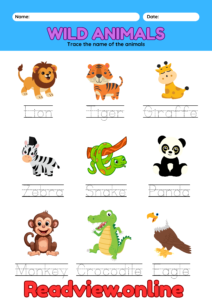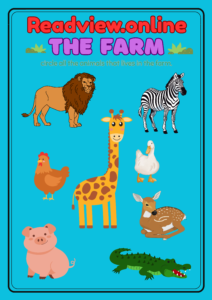
Wonders of the Wild: Discovering Wild Animals
The world of wild animals is full of adventure, mystery, and excitement. From the tallest giraffe to the fastest cheetah, every wild animal has a unique story to tell. Exploring wild animals not only teaches children about nature but also develops curiosity, observation skills, and respect for wildlife.
Thank you for reading this post, don't forget to subscribe!Wild animals live in forests, jungles, savannahs, deserts, and oceans. Unlike pets, they roam freely in their natural habitats and have adapted amazing skills to survive. Learning about them is both educational and thrilling for kids.
Why Learning About Wild Animals Is Important
-
Understanding Nature: Helps children appreciate animals and their habitats.
-
Curiosity and Observation: Noticing how animals eat, move, and interact develops focus.
-
Critical Thinking: Learning about predator-prey relationships, survival, and adaptations encourages logical reasoning.
-
Vocabulary Expansion: Names of animals, their sounds, and behaviors enrich language skills.
-
Environmental Awareness: Teaching kids about wild animals fosters respect for nature and conservation.
Fascinating Wild Animals
1. The Mighty Lion
Known as the “king of the jungle,” lions live in groups called prides. They are strong hunters and communicate with loud roars.
2. The Swift Cheetah
Cheetahs are the fastest land animals, capable of running up to 70 miles per hour. Their speed helps them catch prey in open savannahs.
3. The Gentle Elephant
Elephants are the largest land animals. They are intelligent, social, and have strong memories. Elephants use their trunks to eat, drink, and even play.
4. The Colorful Parrot
Parrots live in tropical forests and are known for their bright feathers and ability to mimic sounds. They eat fruits, seeds, and nuts.
5. The Clever Fox
Foxes are small but very smart. They have sharp senses and are excellent hunters, often using cunning strategies to catch their food.
Fun Activities to Explore Wild Animals
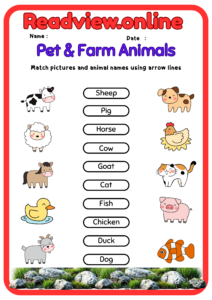
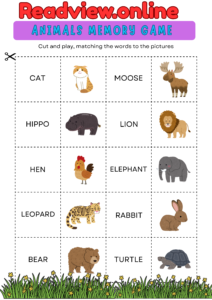
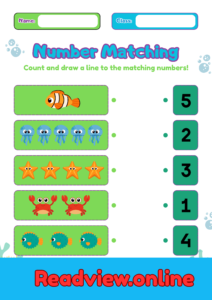
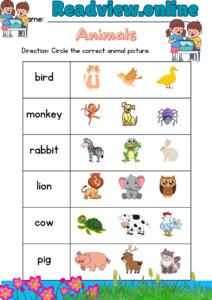
1. Animal Matching Games
-
Match pictures of animals with their names or sounds.
-
Helps improve memory and observation.
2. Wild Animal Storytelling
-
Ask children to create short stories with wild animals as characters.
-
Example: “The lion and the clever fox became friends in the jungle.”
3. Drawing and Coloring
-
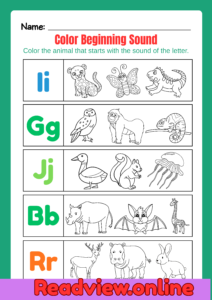
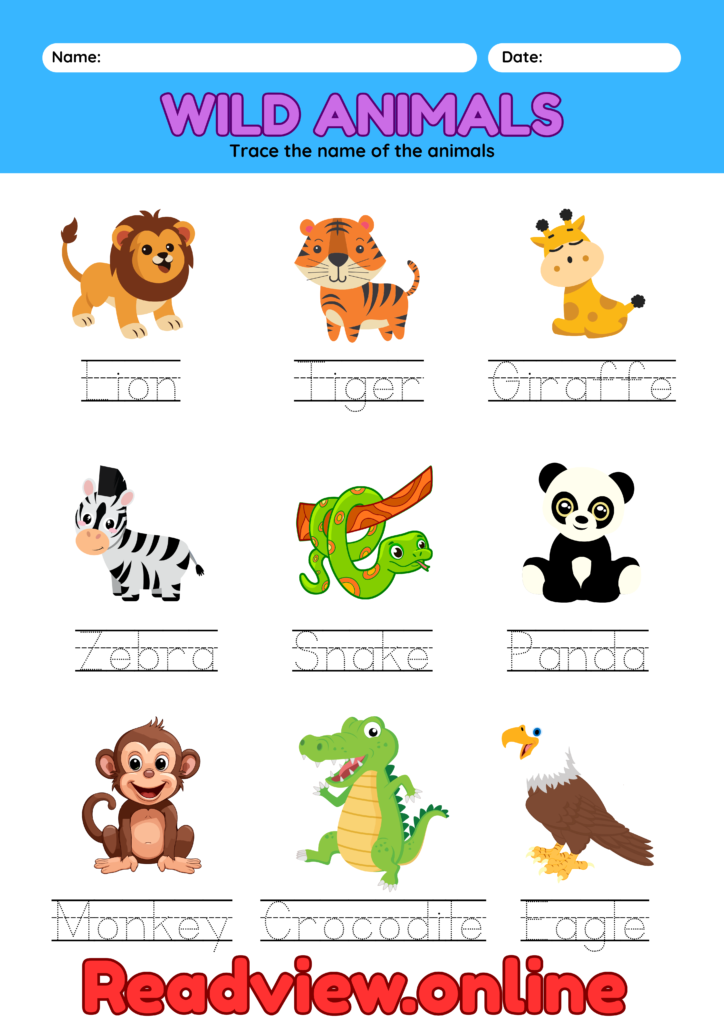
Draw favorite wild animals and color them.
-
Helps develop creativity, fine motor skills, and focus.
4. Animal Sounds and Movements
-
Mimic animal sounds and movements (like hopping like a kangaroo or roaring like a lion).
-
Makes learning active and fun.
5. Habitat Exploration
-
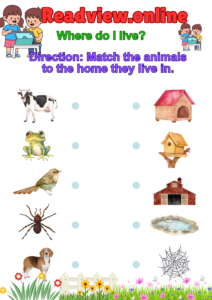
Discuss where each wild animal lives: desert, jungle, forest, or ocean.
-
Helps children understand diversity in nature.
Skills Developed Through Wild Animal Learning
-
Observation and Attention: Noticing details like fur patterns, colors, and sizes.
-
Cognitive Skills: Understanding animal behavior, survival, and adaptations.
-
Language Skills: Learning names, sounds, and descriptions of animals.
-
Creativity: Drawing, storytelling, and imagining animal adventures.
-
Environmental Awareness: Building respect and empathy for wildlife and nature.
Storytime: Jungle Adventure
One sunny day, Ali and Sara went on a jungle safari. They spotted a lion resting under a tree, a parrot singing in the branches, and an elephant drinking from the river. They even saw a clever fox sneaking past bushes.
Ali whispered, “Look at how fast the cheetah is running!”
Sara giggled and said, “I want to draw them all in my notebook!”
They spent the day learning about each animal, their habits, sounds, and habitats. By the end, they had a notebook full of colorful drawings and fun facts, feeling like real explorers in the wild.
Tips for Parents and Teachers
-
Use books, videos, and pictures to make wild animals come alive.
-
Encourage storytelling and imagination: let kids invent adventures with animals.
-
Combine learning with arts and crafts: masks, coloring pages, or clay models.
-
Discuss conservation: teach kids why protecting wild animals is important.
-
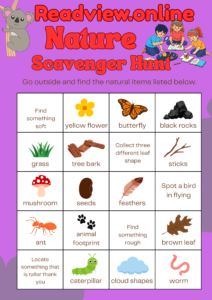
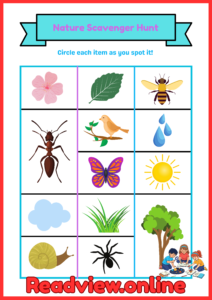
Observe local wildlife if possible: birds, insects, or small mammals teach respect for nature.
Conclusion
Learning about wild animals is a fascinating journey that combines education, creativity, and fun. Children develop critical thinking, observation skills, and empathy while exploring the jungle, savannah, forest, or ocean.
Through stories, activities, and hands-on exploration, wild animals become more than just creatures—they become teachers, friends, and sources of inspiration. This approach nurtures curiosity, creativity, and a lifelong respect for nature.