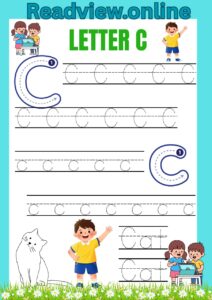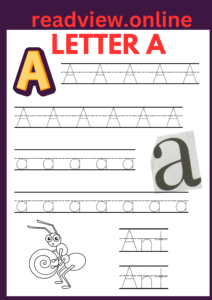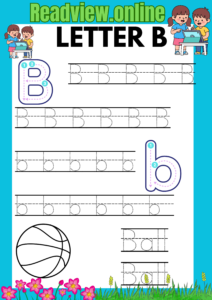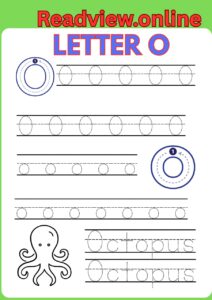
Letter E Worksheet for Kids – A Complete Guide to Early Alphabet Learning
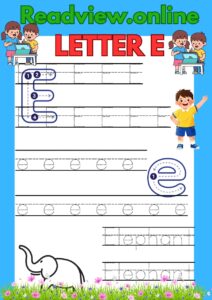
Alphabet learning is a key part of early childhood education. Each letter introduces new sounds, shapes, and words, building the foundation for reading and writing. The Letter E Worksheet is specially designed to help young learners recognize, pronounce, and write the letter E in a fun and interactive way. With consistent practice, children can master the letter E while enjoying the learning process.
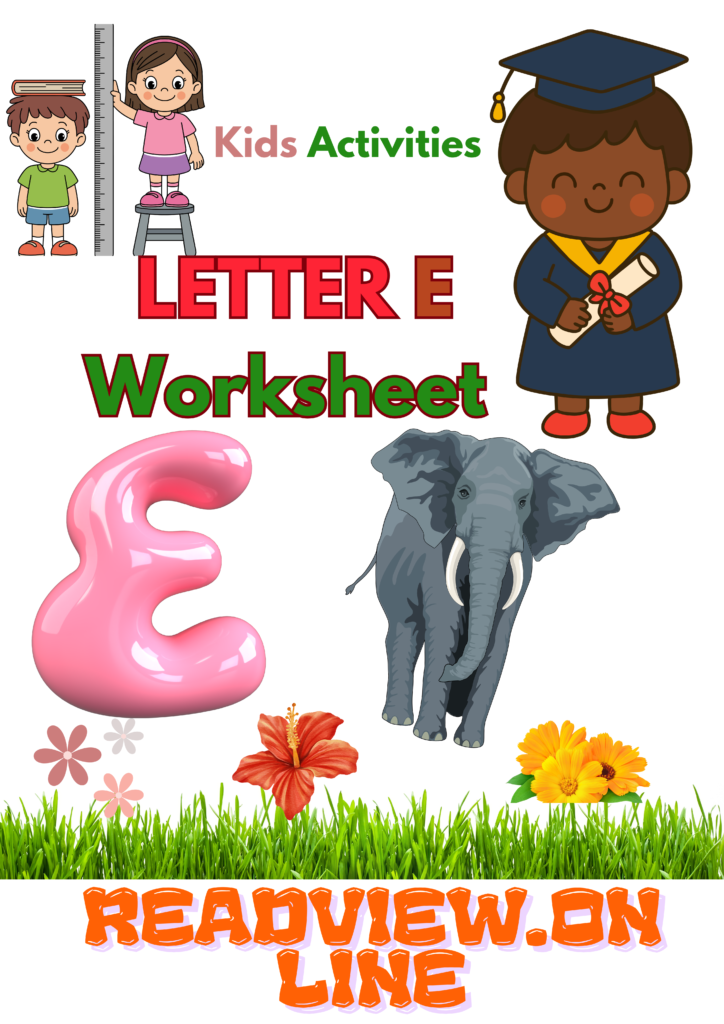
Thank you for reading this post, don't forget to subscribe!The letter E is a vowel and one of the most frequently used letters in the English language. Words like Elephant, Egg, and Ear are familiar to children, making it easier for them to associate the letter with real-life objects. Learning E early strengthens phonics awareness, reading readiness, and vocabulary development.
Why Learning the Letter E Is Important
Learning the letter E plays a vital role in a child’s literacy development:
-
Recognizes vowels and their role in word formation
-
Builds phonics skills for blending sounds
-
Expands vocabulary with common E words
-
Improves reading and writing confidence
Because E is a vowel, it is essential for forming syllables and words. Early mastery of E ensures children can blend it with consonants to form simple words like bed, pen, or red. This lays the foundation for fluent reading and writing.
What Is a Letter E Worksheet?
A Letter E Worksheet is an educational tool designed for preschoolers, kindergarteners, and early grade learners. These worksheets provide structured activities to help children learn the letter E effectively. Common features include:
-
Tracing exercises to practice writing
-
Letter recognition activities for uppercase and lowercase E
-
Phonics exercises for the E sound
-
Coloring and drawing exercises to make learning engaging
Letter E worksheets combine visual, auditory, and hands-on learning, which helps children grasp the letter more effectively.
Skills Developed Through Letter E Worksheets
Letter E worksheets help children develop several essential skills:
1. Letter Recognition
Children learn to identify capital E (E) and small e (e). Recognizing letters consistently helps children spot them in books, signs, and daily life.
2. Phonics and Sound Awareness
Letter E worksheets teach the short “Eh” sound, as in Egg, and sometimes the long “Ee” sound, as in Eagle. Associating letters with sounds enhances pronunciation and early reading skills.
3. Writing and Tracing Skills
Tracing activities teach the correct formation of the letter E. This improves fine motor skills, hand-eye coordination, and handwriting confidence.
4. Vocabulary Building
Learning E words expands a child’s vocabulary. Picture-based exercises help children associate letters with familiar objects, making learning easier and more enjoyable.
5. Focus and Patience
Completing worksheets encourages children to concentrate, follow instructions, and develop patience, which is essential for learning success.
Common Activities in Letter E Worksheets
High-quality Letter E worksheets include a variety of engaging exercises:
● Letter Tracing
Children trace uppercase and lowercase E. This reinforces proper letter formation and helps build writing fluency.
● Coloring Activities
Worksheets often feature objects starting with E, like Elephant, Egg, and Envelope. Coloring reinforces recognition while encouraging creativity.
● Matching Exercises
Children match letters with corresponding pictures, strengthening memory, vocabulary, and phonics skills.
● Find and Circle the Letter E
Children identify and circle the letter E from a group of mixed letters, improving letter recognition and attention to detail.
● Sound Practice
Children repeatedly pronounce the E sound while pointing to corresponding pictures, building strong phonics awareness.
Benefits of Using Letter E Worksheets Regularly
Consistent use of Letter E worksheets provides many educational advantages:
-
Builds a solid foundation for reading and writing
-
Enhances handwriting and fine motor skills
-
Improves phonics and sound recognition
-
Encourages independent learning and confidence
-
Expands vocabulary through repeated exposure to E words
Worksheets also help teachers and parents track progress and provide additional support when needed.
Who Can Use Letter E Worksheets?
Letter E worksheets are suitable for:
-
Preschool children
-
Kindergarten students
-
Grade 1 beginners
-
Homeschooling families
-
Early childhood educators
They can be adapted to match a child’s learning speed and ability level, making them ideal for beginners and children who need extra practice.
How Parents Can Support Learning at Home
Parents play a crucial role in reinforcing the letter E at home. Strategies include:
-
Pointing out objects that start with E around the house or outdoors
-
Practicing the E sound together daily
-
Encouraging children to write E on paper, boards, or sand trays
-
Reading books or stories that include E words
Positive reinforcement encourages children to enjoy learning and helps develop a lasting interest in letters.
Tips for Teachers Using Letter E Worksheets
Teachers can improve learning outcomes by:
-
Combining worksheets with songs, rhymes, and storytelling
-
Encouraging group discussions about E words
-
Providing extra tracing or coloring exercises for children who need more practice
-
Praising effort and improvement rather than focusing solely on perfection
A supportive, interactive classroom environment helps children stay engaged and motivated.
Printable and Digital Letter E Worksheets
Letter E worksheets are available in both printable and digital formats:
-
Printable worksheets: Ideal for hands-on activities, coloring, and tracing
-
Digital worksheets: Interactive exercises suitable for tablets, computers, or online lessons
Both options provide flexibility for parents, teachers, and children to practice the letter E anywhere.
Common Mistakes to Avoid During Practice
To ensure effective learning, avoid:
-
Giving too many activities at once, which may overwhelm the child
-
Expecting perfect writing or pronunciation immediately
-
Comparing a child’s progress with others
-
Skipping phonics practice in favor of writing only
Every child learns at their own pace, and patience is key for successful learning.
Conclusion
The Letter E Worksheet is a valuable tool that supports early literacy development in children. Through tracing, phonics practice, coloring, and interactive activities, children learn to recognize, pronounce, and write the letter E confidently. Regular practice strengthens reading readiness, improves handwriting, and builds a strong foundation for future learning.
By using high-quality Letter E worksheets, parents and teachers can create an engaging and positive learning environment. Children not only master the letter E but also develop a love for learning that will benefit them throughout their educational journey.