Double-Digit Subtraction Made Fun for Kids
Learning subtraction is an exciting step in early mathematics. Once children master single-digit subtraction, the next challenge is double-digit subtraction. Understanding this concept helps children handle bigger numbers, develop problem-solving skills, and build confidence in math.
Thank you for reading this post, don't forget to subscribe!With hands-on activities, stories, and interactive exercises, double-digit subtraction can become fun instead of intimidating.
Why Double-Digit Subtraction Matters
-
Foundational Math Skills: It builds a strong base for future concepts like multiplication, division, and money math.
-
Critical Thinking: Children learn to break problems into smaller steps.
-
Everyday Use: Subtraction is used in shopping, sharing, and measuring.
-
Confidence in Numbers: Successfully solving double-digit problems boosts self-esteem.
Key Concepts of Double-Digit Subtraction
-
Tens and Ones: Understanding place value is essential. For example, in 47 − 25:
-
Tens: 4 − 2 = 2 tens
-
Ones: 7 − 5 = 2 ones
-
Answer: 22
-
-
Borrowing / Regrouping: If the top digit in ones is smaller than the bottom, borrowing from tens is needed. Example: 52 − 28.
-
Step-by-Step Approach: Break subtraction into tens and ones for easier calculation.
Fun Activities to Practice Double-Digit Subtraction
1. Use Real Objects
Take toys, candies, or blocks:
-
Start with 45 blocks and remove 23 blocks.
-
Ask children to count the remaining blocks.
Hands-on practice helps visualize subtraction.
2. Number Line Method
Draw a number line from 0 to 100:
-
Start at the bigger number.
-
Jump backward by tens and ones to find the answer.
This method helps children see subtraction as movement, not just numbers.
3. Subtraction Stories
Create real-life scenarios:
-
“Ali had 72 marbles. He gave 36 to his friend. How many marbles does Ali have now?”
-
Story problems make abstract numbers relatable.
4. Coloring by Answer
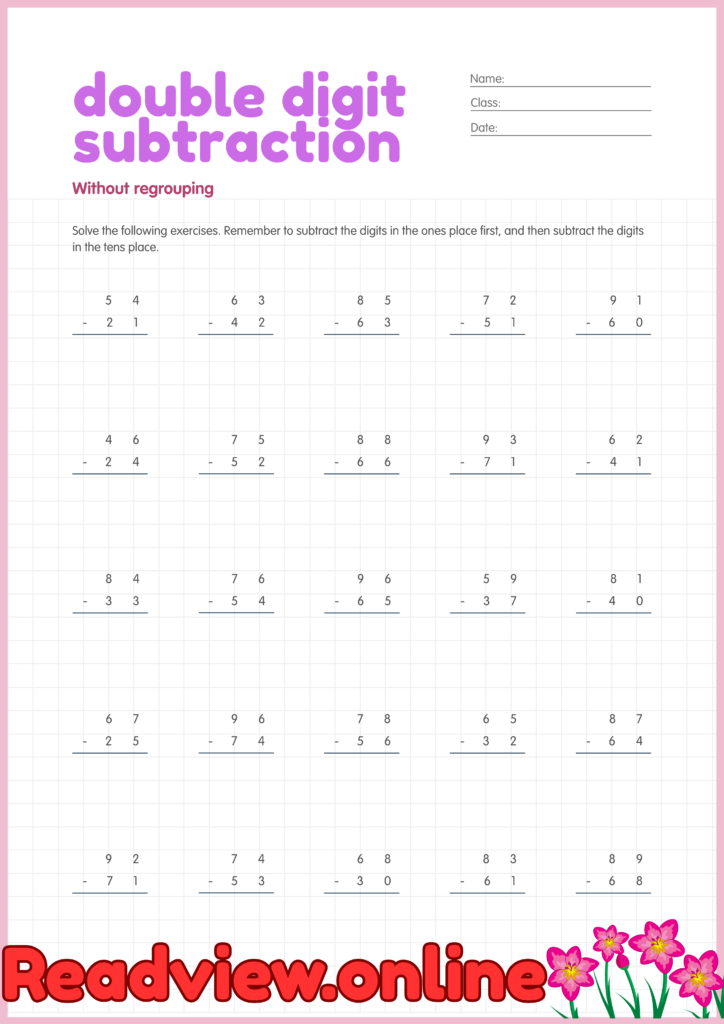
Prepare worksheets with subtraction problems and coloring sections:
-
Solve 56 − 29
-
Color the section with the correct answer
-
Combine learning and creativity
5. Subtraction Games
-
Flashcards: Show a double-digit subtraction problem and let kids solve.
-
Bingo: Solve problems to mark numbers on a bingo board.
-
Pair Work: Children challenge each other to solve problems faster.
Skills Developed Through Double-Digit Subtraction
-
Numerical Fluency: Understanding and manipulating larger numbers.
-
Problem-Solving: Applying strategies like borrowing/regrouping.
-
Concentration: Following step-by-step methods improves focus.
-
Confidence: Success in solving problems encourages kids to attempt harder challenges.
-
Practical Life Skills: Kids understand subtraction in real-life scenarios like sharing or shopping.
Tips for Parents and Teachers
-
Start with small numbers: Begin with 2-digit numbers without borrowing.
-
Introduce borrowing gradually: Once confident, move to problems requiring regrouping.
-
Use visuals: Counters, blocks, and charts help children understand abstract numbers.
-
Encourage verbalization: Ask children to explain steps aloud.
-
Praise effort: Reward attempts, not just correct answers, to keep motivation high.
Story Example: The Candy Subtraction
In a small town, Sara had 67 candies. She wanted to share them with her friends. She gave 28 candies to Ali and 15 candies to her little brother.
-
Step 1: Subtract Ali’s candies: 67 − 28 = 39
-
Step 2: Subtract her brother’s candies: 39 − 15 = 24
Sara counted the remaining candies and realized she still had 24 candies left. Through this story, children can see subtraction in action and understand double-digit problems easily.
Conclusion
Double-digit subtraction is an important math skill that children will use throughout life. By using hands-on activities, stories, number lines, and creative exercises, kids can understand subtraction concepts clearly while having fun.
Learning subtraction with real-life examples and interactive methods builds confidence, critical thinking, and a strong foundation for advanced math. Double-digit subtraction can be simple, engaging, and memorable when taught in a creative, playful way