Two-Digit Subtraction for Kids: Learn Numbers with Fun
Subtraction is one of the first math skills children learn, and mastering two-digit subtraction is the next big step after single-digit problems. Two-digit subtraction teaches kids how to work with larger numbers, develop logical thinking, and solve real-life problems.
Thank you for reading this post, don't forget to subscribe!With fun activities, examples, and stories, children can understand subtraction in a playful and memorable way.
Why Two-Digit Subtraction Is Important
-
Math Foundation: Builds a strong base for addition, multiplication, and division.
-
Critical Thinking: Helps children understand numbers and how to manipulate them.
-
Real-Life Skills: Subtraction is used in shopping, sharing, and measuring objects.
-
Confidence in Numbers: Solving problems successfully boosts self-esteem.
Key Concepts
-
Place Value: Understanding tens and ones is essential. For example: 56 − 34
-
Tens: 5 − 3 = 2 tens
-
Ones: 6 − 4 = 2 ones
-
Answer: 22
-
-
Borrowing/Regrouping: When the top digit in the ones place is smaller than the bottom digit, borrowing is required. Example: 42 − 28
-
Step-by-Step Approach: Break subtraction into tens and ones for easier calculation.
Fun Activities for Two-Digit Subtraction
1. Counting Objects
Use toys, blocks, or candies:
-
Start with 65 blocks and remove 27 blocks.
-
Count the remaining blocks.
Hands-on activities help children visualize subtraction.
2. Number Line Method
Draw a number line from 0 to 100:
-
Start at the bigger number and jump backward by tens and ones.
-
Helps children see subtraction as movement, not just numbers.
3. Subtraction Stories
Create fun story problems:
-
“Ali had 78 marbles. He gave 34 to his friend. How many marbles are left?”
Stories make abstract numbers relatable and easier to understand.
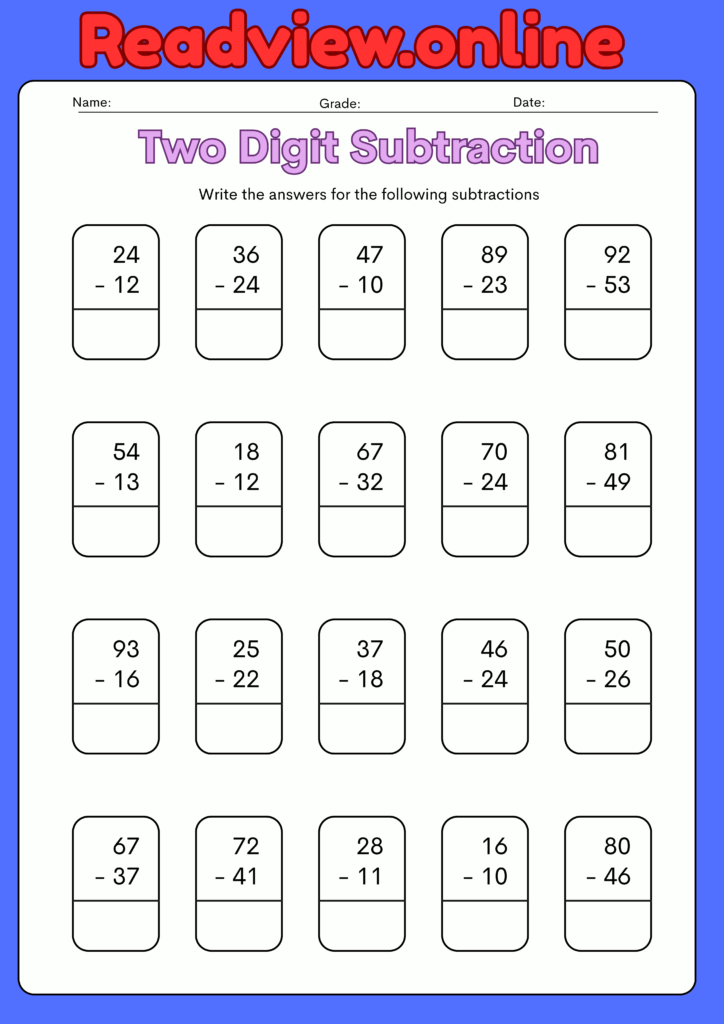
4. Color by Answer Worksheets
-
Solve 63 − 29
-
Color the section with the correct answer
-
Combines learning with creativity
5. Subtraction Games
-
Flashcards: Show problems, let kids solve them.
-
Bingo: Solve problems to mark numbers.
-
Group Challenges: Compete to solve problems faster.
Skills Developed Through Two-Digit Subtraction
-
Numerical Fluency: Understanding and working with larger numbers.
-
Problem-Solving: Applying strategies like borrowing/regrouping.
-
Concentration: Following step-by-step methods improves focus.
-
Confidence: Successfully solving problems encourages kids to attempt harder challenges.
-
Practical Life Skills: Understanding subtraction in everyday situations.
Story Example: The Toy Shop
Sara went to a toy shop with 86 coins. She bought a doll for 47 coins and a ball for 29 coins.
-
Step 1: Subtract the doll’s price: 86 − 47 = 39
-
Step 2: Subtract the ball’s price: 39 − 29 = 10
Sara counted her remaining coins and found she still had 10 coins left. Through this story, children learn how subtraction works in real-life situations.
Tips for Parents and Teachers
-
Start Small: Begin with problems without borrowing, then introduce regrouping.
-
Use Visuals: Counters, blocks, and charts help children understand numbers.
-
Encourage Verbalization: Ask children to explain steps aloud.
-
Celebrate Effort: Praise attempts, not just correct answers.
-
Make It Fun: Turn subtraction problems into games or challenges.
Conclusion
Two-digit subtraction is a vital skill that children will use in many areas of life. By combining hands-on activities, stories, games, and worksheets, children learn subtraction effectively while having fun.
These activities boost confidence, critical thinking, and numeracy skills, ensuring children are ready for advanced math concepts. Learning subtraction can be interactive, playful, and memorable when taught creatively.