Life on the Farm: Learn, Play, and Explore
A farm is a wonderful place full of animals, plants, and exciting activities. Learning about farms helps children understand nature, animals, and where food comes from. Farms are not just fun—they also teach responsibility, observation, and curiosity about the world around us.
Thank you for reading this post, don't forget to subscribe!Meet the Farm Animals
Farms are home to many animals. Each animal has unique sounds, habits, and roles on the farm:
-
Cow – Gives milk that we drink and use to make butter and cheese.
-
Chicken – Lays eggs for breakfast!
-
Sheep – Provides wool for making warm clothes.
-
Pig – Loves to play in the mud and helps farmers in many ways.
-
Horse – Helps carry loads or give rides.
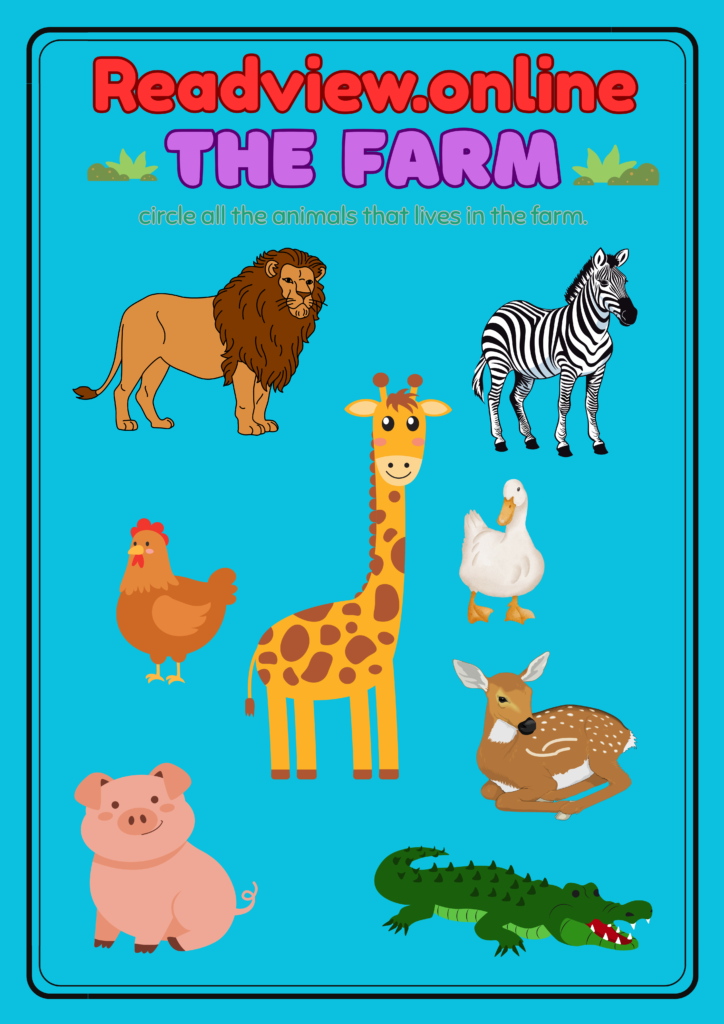
Children can read about, color, and draw these animals to remember their names and sounds.
Fun Words and Sentences About the Farm
Here are some simple words and sentences for kids:
-
Cow – The cow says “Moo.”
-
Pig – The pig rolls in the mud.
-
Hen – The hen lays eggs.
-
Farm – The farm is full of animals.
-
Barn – Animals sleep in the barn.
Practice reading aloud, tracing letters, and coloring the animals while saying these sentences.
Storytime: A Day on the Farm
One sunny morning, Ali visited a farm. He saw cows grazing, chickens clucking, and pigs playing in the mud.
“Good morning, Cow!” said Ali.
“Good morning, Ali!” replied the cow with a happy “Moo.”
Ali helped collect eggs from the hen’s nest and gave the horse some fresh hay. By the end of the day, Ali had learned the names of every farm animal and even drew a colorful picture in his notebook.
This story teaches animal names, sounds, and daily farm activities, making learning fun and interactive.
Activities to Explore the Farm
1. Animal Sounds Game
-
Make the animal sounds: Moo, Oink, Baa, Neigh.
-
Ask children to guess the animal.
-
Helps with listening, memory, and recognition.
2. Matching Animals to Their Homes
-
Cow → Barn
-
Hen → Coop
-
Pig → Pen
-
Horse → Stable
Children can draw lines or color-code the matches.
3. Coloring Farm Scenes
-
Draw a farm with a barn, animals, and trees.
-
Color animals with realistic or imaginative colors.
-
This builds fine motor skills and creativity.
4. Counting and Sorting on the Farm
-
Count the number of cows, pigs, or chickens.
-
Sort animals by size or color.
-
Integrates math and observation skills.
5. Story Creation
-
Ask children to write or narrate their own farm story.
-
Example: “The pig found a red ball. He shared it with the sheep and cow.”
-
Encourages creativity and sentence-building.
Skills Developed Through Farm Learning
-
Vocabulary Skills: Learning animal names, farm tools, and actions.
-
Observation Skills: Watching how animals behave and live.
-
Fine Motor Skills: Coloring, tracing, and drawing.
-
Counting and Sorting: Using numbers in everyday farm activities.
-
Imagination and Storytelling: Creating stories about farm life.
Tips for Parents and Teachers
-
Use farm-themed books, toys, or videos to make learning interactive.
-
Encourage children to act like animals, mimicking their sounds and movements.
-
Combine reading, writing, and coloring for multi-sensory learning.
-
Visit a real farm or virtual farm video to make learning concrete.
-
Praise creativity and effort rather than perfection to boost confidence.
Conclusion
The farm is a fun and educational world for children. Learning about animals, their sounds, and daily farm activities helps kids develop vocabulary, observation, and creativity.
Through stories, coloring, counting, and games, children can experience the farm right at home or school. Farms teach responsibility, empathy for animals, and the joy of exploring nature—making learning an adventure every day.